Stop Dreaming, Start Doing: The Strategic Operations Audit for a Better 2025

About the author
 Opscalers
Featured Article
The "Resolution Trap" is relying on perseverance when growth demands a systematic "Revolution." Stop compounding...
Recent Posts

Browse By Category
Table of Contents
Every December, the cycle begins. Companies large and small draft impressive lists of New Year’s Resolutions: Be more agile. Drive 20% revenue growth. Improve internal communication.
These goals are not just aspirations; they are vital intentions. Yet, if your company is anything like the companies Opscalers partners with, you know the outcome: by March, those resolutions have dissolved. They sink under the same operational weight they were intended to lift—disorganization, duplicated effort, and a pervasive lack of clarity.
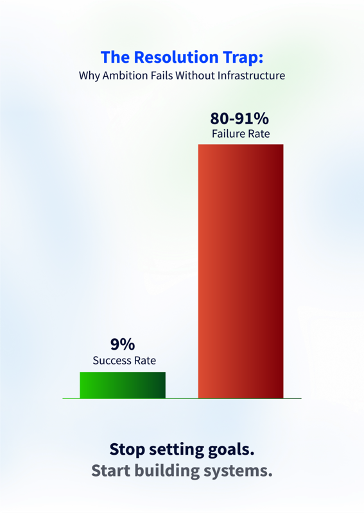
After all, the data is relentless: a survey of American adults found nearly 80–91% of New Year’s resolutions fail [3, 4]—only about 9% of people who set resolutions fully achieve them. Even more striking: about 23% abandon their resolutions within the first week, and 43% drop them by the end of January [5, 6].
The problem isn’t a lack of ambition. The problem is a lack of infrastructure.
The classic New Year’s Resolution targets the symptom. The true driver of sustainable growth is a System Revolution that must be engineered before the clock strikes midnight on January 1st. You don’t need more perseverance; you need predictable performance.
Opscalers believes the single most strategic initiative you can undertake in the final quarter is a comprehensive Operations Audit. This isn’t just a review of last year’s finances; it’s a surgical assessment of the machine that drives your business. It is the mandatory pre-year planning that transitions you from a reactive organization that fights fires to a predictive one that controls its future.
The Resolution Trap Revisited: Why Your Growth is Compounding Chaos
Many leaders, particularly in high-growth startups, mistake motion for progress. When systems are ad hoc, responsibilities are vague, tribal knowledge replaces documented SOPs, and inefficiency is tolerated.
But as we always say: Growth doesn’t fix inefficiency—it exposes it.
Adding headcount to a broken process only creates more expensive chaos. Adding new tools without consolidating old ones creates financial leakage and data silos. Relying on founders and corporate officers to be the constant operational “heroes” leads directly to burnout, bottlenecks, and work slipping through the cracks.
You cannot scale with broken systems. The Operational Audit is the only way to stop duct-taping your processes together and start building scalable pipelines. It’s the necessary step to identify and eliminate the silent drain on your profitability before the market resets its expectations in the New Year.
From Firefighter to Architect: The Power of a Predictive Audit
A Strategic Operations Audit is a deep, objective diagnosis of your organization as a living, integrated system. It is designed to replace guesswork with data and sentiment with structure. Many businesses today are crippled by poor data and fragmented systems.
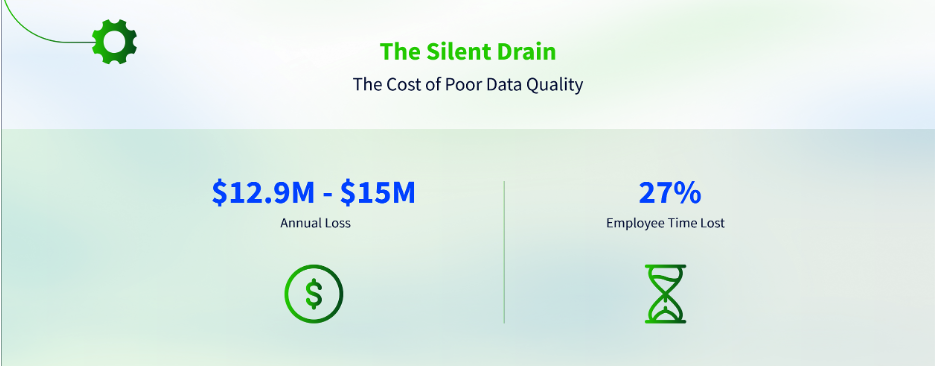
According to recent research, companies lose up to USD $12.9–15 million annually due to poor data quality alone [7, 8]. Moreover, employees in some organizations spend up to 27% of their time just correcting bad data or reconciling conflicting systems [9].
The goal of this pre-year planning exercise is to transition your organization from Stage 1.
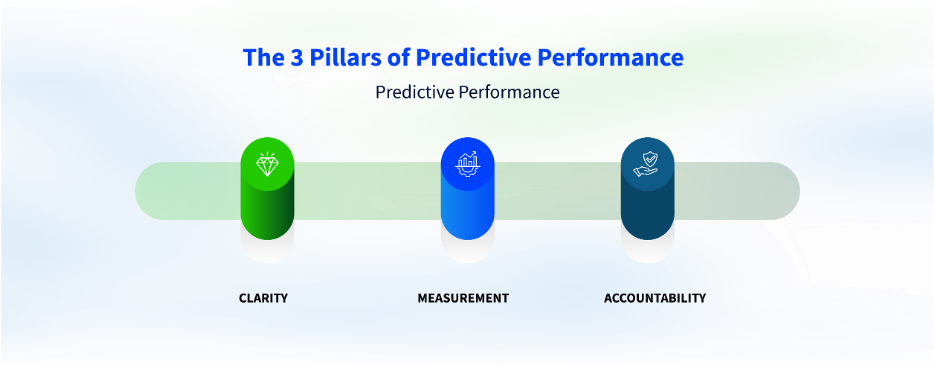
(Reactive—everything is urgent) to Stage 3 (Predictive—the company anticipates friction before it appears). This leap is possible only when you commit to building a foundation based on three core pillars:
- Clarity: Eliminating confusion about who owns what and how tasks get done.
- Measurement: Replacing subjective performance reviews with objective, data-driven outcomes.
- Accountability: Ensuring defined follow-through that works without constant managerial micromanagement.
Without this audit, you are making decisions for 2026 based on the flawed, incomplete reality of 2025. With it, you gain the operational visibility necessary to manage performance, mitigate risk, and achieve maximum sustainable velocity.
The 3-Step Pre-Year Audit Framework
The best part of the audit is that it transforms an overwhelming task into a clear, actionable framework. Opscalers structures this process into three phases designed to move you quickly toward implementation.
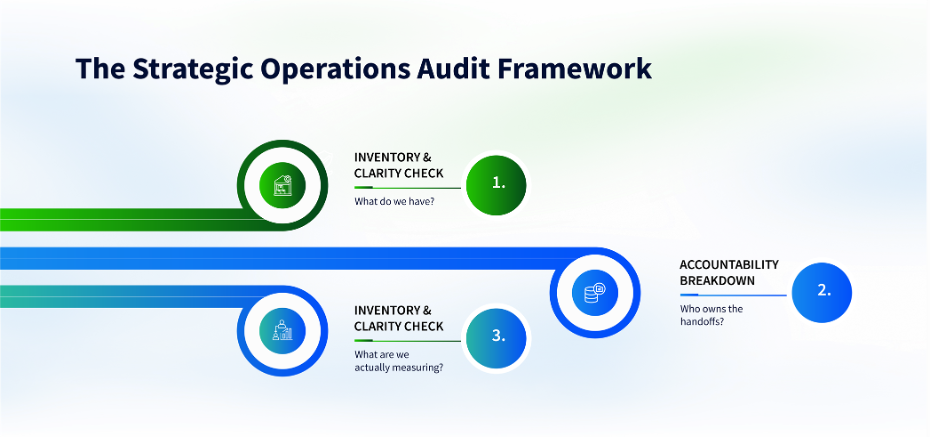
Step 1: The Inventory & Clarity Check (What do we have?)
Before you can improve anything, you must document everything. This is where you map your organization like an electrical blueprint.
- Process Mapping: Document every recurring internal process—from client onboarding to invoice processing, from product deployment to reporting. The key is to document how the process actually works, not how you wish it worked.
- SOP Identification: Identify every instance where “tribal knowledge” is used. If a process depends on someone’s memory, it’s a failure point. Turn this knowledge into clear, accessible Standard Operating Procedures (SOPs).
- Tool Rationalization: Take a firm inventory of all software licenses. Consolidate redundant tools. Identify platforms that are underutilized or, worse, being used for tasks they were never designed for. The goal is to define the “single source of truth” for every operational area.
Step 2: The Accountability Breakdown (Who owns the handoffs?)
A system is only as strong as its weakest handoff. In 90% of companies, friction occurs not within a department, but between them.
- Define Ownership: Review all documented processes to ensure a specific, named individual or role owns the outcome of that process. A task without ownership is just paperwork waiting to be forgotten.
- Handoff Mapping: Focus on the transitions: Sales to Operations, Operations to Finance, etc. Where do tasks fall through the cracks? These gaps are often caused by vague responsibilities or a lack of standardized communication between teams. Define service level agreements (SLAs) for internal handoffs.
- Role Clarity: Ensure every role has a clearly defined scope and measurable outcomes aligned with the 2026 strategy. This eliminates wasted effort and the constant management of internal friction.
Step 3: The Data Alignment (What are we actually measuring?)
Many businesses are data-rich but insight-poor. You might be tracking dozens of KPIs, but are those KPIs truly measuring performance, or are they just vanity metrics?
- Strategic KPI Review: Compare your current reporting dashboards against your desired 2026 outcomes. Are you measuring leading indicators (which are actionable) or just lagging indicators (which are historical)?
- Visibility Check: Does leadership have a single, accurate source of truth for operational performance and risk mitigation in real-time? If your decisions require compiling data from three different spreadsheets, your system is broken.
- Predictive Intelligence: Look at utilization rates, process cycle times, and friction points identified in Step 2. Use this data to predict where bottlenecks will appear before they manifest, allowing you to proactively resource or redesign the process.
Lead the Revolution
The New Year will not magically install the structure you need. You have to build that infrastructure now.
The Strategic Operations Audit is more than just an end-of-year task; it is the most powerful catalyst for Q1 growth. It allows you to align your people to a clean process, ensure every tool drives maximum ROI, and transforms your entire operational model.
Opscalers doesn’t just deliver a 90-page strategy document. Opscalers partners with you to execute this audit, implement the solutions, and train your team to run the new, scalable system with confidence. Opscalers helps you stop dreaming about efficiency and start engineering it.
If you’re ready to trade stagnation for structure and turn operational chaos into a clear, manageable machine, the time to start is today.
Let’s get your operations running the way they should be.
[→ Book a Discovery Call with Opscalers]
Sources Used
- “New Year’s Resolutions Statistics and Trends” — Drive Research, 2024. Drive Research
- “Why Most New Year’s Resolutions Fail” — LeadReadToday (Fisher College of Business), 2023. Fisher College of Business
- “5 Common Mistakes That Cause New Habits to Fail” — James Clear. James Clear
- “New Year’s Resolution Statistics (2023 Updated)” — DiscoverHappyHabits.com. Discover Happy Habits
- “Data Quality: Best Practices for Accurate Insights” — Gartner / related article, referencing average $12.9M annual cost per org. Gartner+2IBM+2
- “The Hidden Cost of Poor Data Quality & Governance” — Acceldata, 2025. Acceldata
- “The Costly Consequences of Poor Data Quality” — Actian blog, 2024. Actian
- “50 Statistics Every Technology Leader Should Know in 2025” — Integrate.io, 2025. Integrate.io+1
- Additional data-quality cost context from “The cost of poor data quality on business operations” — LakeFS blog, 2024. lakeFS+1