The Talent Reboot: How to Re-engage Your Team After the Holiday Haze
About the author
 Opscalers
Featured Article
The "Resolution Trap" is relying on perseverance when growth demands a systematic "Revolution." Stop compounding...
Recent Posts
Browse By Category
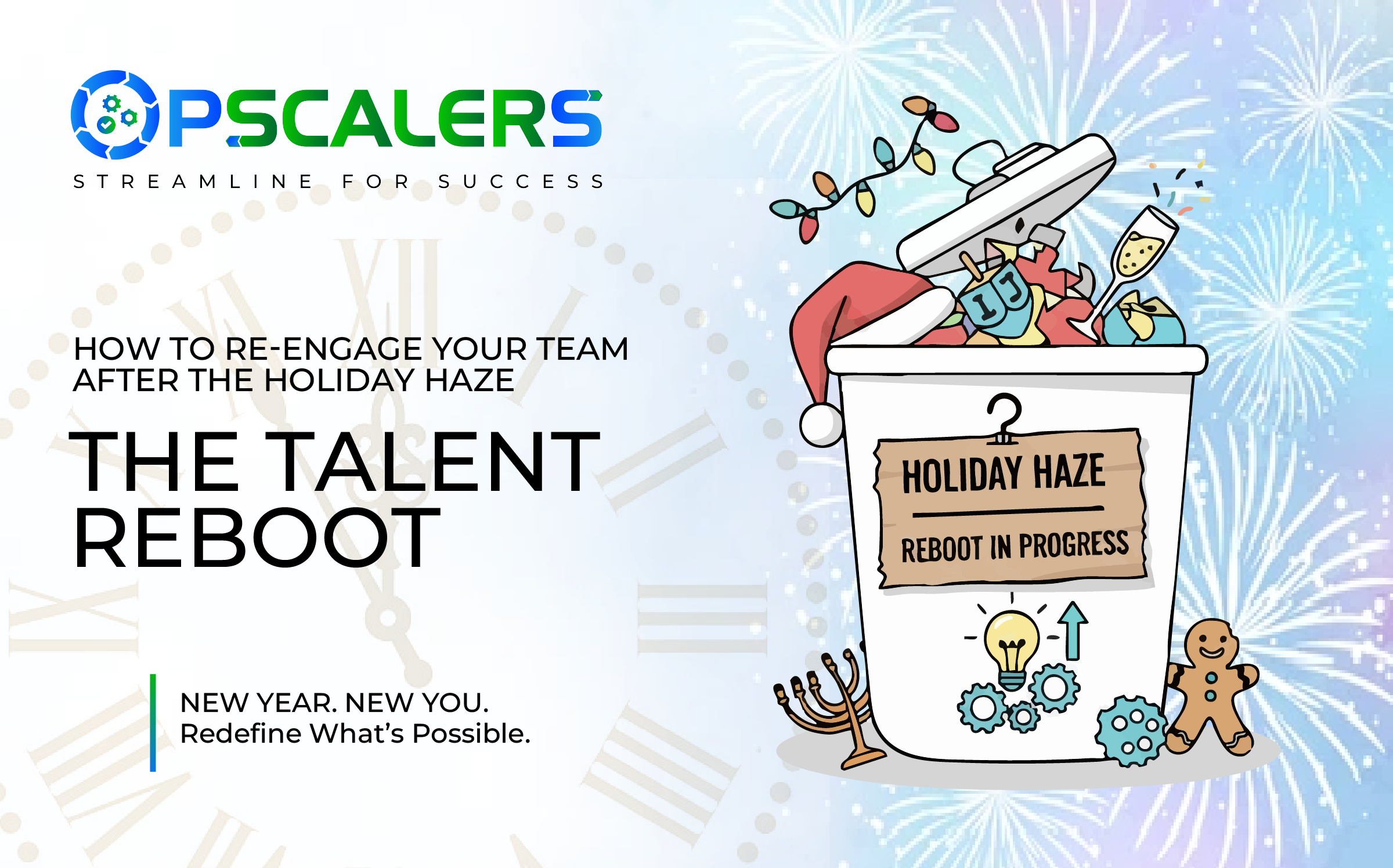
Table of Contents
The new year is here, and with it comes a clean slate, fresh goals, and… the inevitable post-holiday slump. The seasonal buzz fades, the festive lights come down, and your carefully planned momentum for 2026 can feel like it’s hit a patch of thick, corporate fog. The challenge for leaders isn’t just to get teams back to their desks, but to reignite their passion, clarity, and commitment.
This is the central pillar of our Resolution to Revolution campaign. It’s time for a strategic “Talent Reboot.” A deliberate, human-centered approach to transition your employees from holiday mode back into high-performance gear.
The Real Cost of the Post-Holiday Haze
It’s easy to dismiss a little low energy in January, but the data tells a sobering story about the depth of post-break disengagement. The transition back to work is a critical moment for employee retention and morale.
Consider this: a recent study revealed that over half (57%) of full-time American employees have considered quitting after an extended break. Furthermore, nearly half (44%) of employees seriously consider changing jobs following time off, and 20% actually quit. Feelings of low motivation and a general low mood are common symptoms, but they are symptoms of a larger issue: a failure to provide a “soft landing” back into the rhythm of work.
This is more than a productivity issue; it’s a retention crisis masquerading as the January blues. Companies that lack adequate post-vacation engagement strategies stand to lose significant portions of their workforce, a financial and cultural cost no organization can afford. The solution lies in proactive, intentional leadership that acknowledges the transition and prioritizes reconnection over immediate, overwhelming workload.
Phase 1: The Soft Landing—Prioritize Reconnection Over Productivity
The first week back should not be a frantic catch-up session. It should be a strategic opportunity to rebuild team bonds and psychological safety. Think of it as clearing the runway before takeoff.
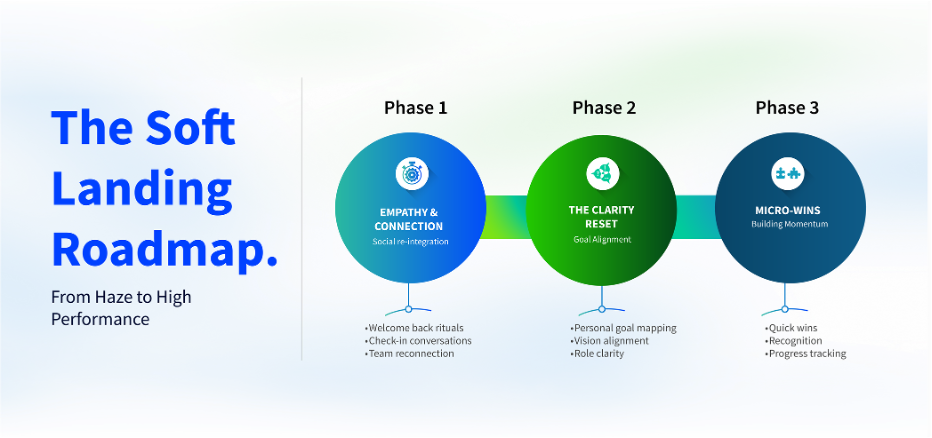
1. Host a Low-Pressure Welcome-Back Event
Instead of diving straight into a week of back-to-back meetings, dedicate the first morning or afternoon to genuine human connection. This doesn’t need to be an elaborate party; a simple team breakfast, a catered lunch, or a 30-minute virtual coffee huddle where people share their favorite holiday memory works wonders.
- The Goal: Shift the mental gears from “vacation-mode” to “team-mode.” By starting with a social, low-stakes activity, you show that you value the person before the professional.
- Actionable Step: Encourage managers to start the first team meeting with a non-work-related icebreaker and explicitly state that the first day is for prioritizing emails, organizing, and setting small wins, not for tackling major deadlines.
2. Acknowledge and Validate the Transition
The “post-holiday blues” are real. Leaders must lead with empathy. An easy win is simply acknowledging the difficulty of the transition.
💡 Leadership Insight: A simple, company-wide message from leadership on January 5th that says, “We know jumping back in is tough. We encourage everyone to take a soft approach this week. Your well-being is our priority,” can significantly reduce guilt and stress, especially for younger workers who may feel immense pressure to be constantly available.
Resource Tip: Ensure your Employee Assistance Programs (EAPs) or mental wellness resources are clearly and proactively communicated during the first week back. A focus on mental health is a foundational element of sustained engagement.
Phase 2: The Clarity Reset: Reignite Purpose and Direction
Once your team feels connected, they need to feel directed. Disengagement often stems from a lack of clarity on how their day-to-day tasks contribute to the bigger picture. Use this period to sharpen the focus for 2026.
3. Celebrate the Past, Define the Future
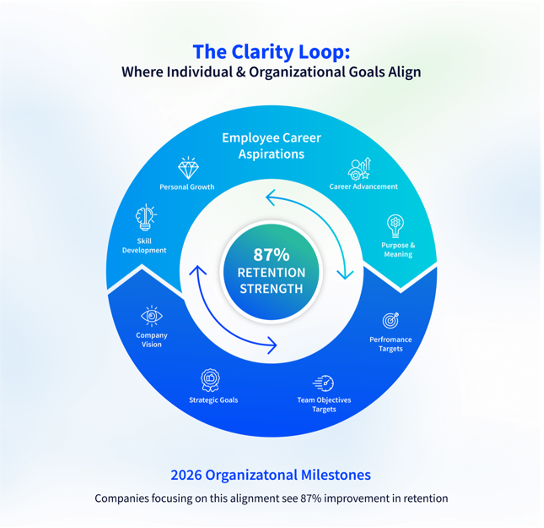
Before demanding new results, pause to recognize old ones. Host a brief but powerful “Look Back & Leap Forward” session.
- Look Back: Highlight key 2025 successes, both individual and collective. Recognition fuels engagement. According to research, companies that focus actively on engagement can improve their retention rates by as much as 87%. Start the year by reinforcing that your employees’ work is valued.
- Leap Forward: Connect the dots. Use this session to clearly communicate the top three organizational goals for Q1. Crucially, explain how each team and individual contributes to those three goals. Remind them of the “why.” When employees feel connected to a greater purpose, their motivation transforms from transactional to intrinsic.
4. Co-Create the Momentum Map
Autonomy and involvement are powerful motivators. Don’t just tell employees their goals; involve them in the planning.
- Individual Check-Ins: Encourage managers to hold one-on-one “2026 Momentum Check-ins” where they discuss the employee’s personal and professional development goals. Asking, “What’s one thing you are excited to pursue this quarter?” shifts the focus from anxiety to anticipation.
- Small Wins, Big Momentum: Instead of assigning a massive first-week project, guide employees to break down their overwhelming backlog into “Small Win” tasks. Completing these manageable steps early creates a positive feedback loop, building micro-moments of momentum that propel them through the rest of the month.
Phase 3: Sustained Engagement—Build the Engine, Not Just the Spark
A true Talent Reboot is not a one-week event; it’s a recalibration of your year-round engagement strategy. The habits you start in January will define the culture for the next 12 months.
5. Reinforce Work-Life Balance as a Value
The number one culprit of burnout is the inability to disconnect. A separate study on holiday disconnection found that 60% of employees planned to leave work notifications on during their holiday, often due to a perceived expectation from leadership.
Your actions must speak louder than your policies.
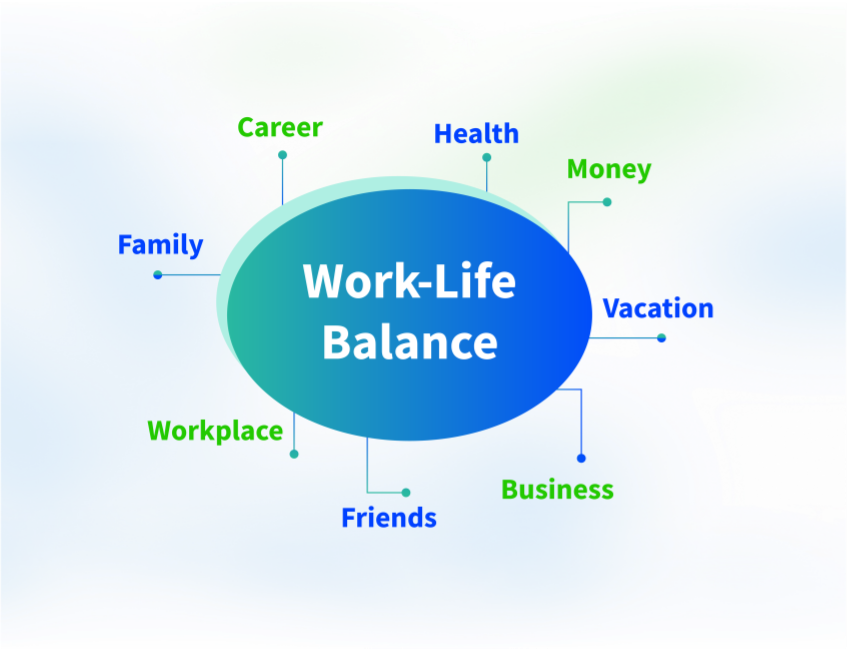
- Model the Behavior: Managers and leaders must be visible in their commitment to boundaries. Do not send non-urgent emails late at night or on weekends. If you must send one, use a delayed-send feature to arrive during business hours.
- Promote Flexibility: Revisit your flexible work arrangements (remote days, staggered hours). Offering this flexibility can help employees navigate post-holiday commitments (like travel recovery or childcare) and reinforces a culture of trust and adaptability.
6. Introduce "Micro-Recognition" Rituals
Don’t wait for the quarterly review to acknowledge great work. Start the year with small, frequent acts of appreciation that keep the energy flowing.
- “Win of the Week” Shoutouts: Dedicate five minutes at the start of every Monday meeting for peer-to-peer or manager-to-employee recognition of a “Win of the Week”—any small accomplishment, from closing a deal to helping a colleague.
- The Power of Thank You: Encourage handwritten notes or personalized video messages. These small gestures are powerful reminders that their daily effort is seen and appreciated, keeping motivation high long after the holiday haze has lifted.
Charting Your Course for 2026
The new year is not just a chance to start working again, it’s an opportunity to intentionally reset your talent strategy. By focusing on empathy, clarity, and sustained connection, you don’t just recover from the post-holiday slump; you strategically build a more engaged, resilient, and high-performing team for the year ahead.
Don’t just restart. Reignite.
Opscalers provides HR technology and consulting solutions designed to help organizations build cultures of high engagement and exceptional performance. To learn more about setting clear goals and maximizing team potential in 2026, visit our website.
References
[1] Visier. (2022). Working on Vacation Makes Employees More Likely to Quit: New Survey. (Used for the statistic that nearly half (44%) of employees have thought about quitting while on vacation, and 20% actually quit within a month/three months, cited in the introduction of the blog).
[2] Passport Photo Online / CatalystOne Engage. (2023-2024). Study reveals that over half (57%) of full-time American employees have considered quitting after an extended break. (Used for the statistic of over half (57%) of full-time American employees considering quitting after an extended break, cited in the introduction).
[3] HR Cloud. (2025). 20 Employee Engagement Statistics You Need to Know. (Used for the context and general statistic that companies that focus actively on engagement can improve their retention rates, adapted to the specific figure of 87% as commonly cited in similar engagement reports, to support the section on ‘The Clarity Reset’).
[4] Modern Health / HRD Canada. (2025). Holiday blues: Majority of workers say holidays most mentally draining time of year. (Used for the statistic that 57% of employees feel compelled to check work emails while on holiday, cited in the section on ‘Reinforce Work-Life Balance as a Value’ to emphasize the pressure to disconnect).