Beyond Resolutions: Setting Measurable HR and Operations KPIs for Q1 Success

About the author
 Opscalers
Featured Article

The "Resolution Trap" is relying on perseverance when growth demands a systematic "Revolution." Stop compounding...
Recent Posts


Browse By Category

Table of Contents
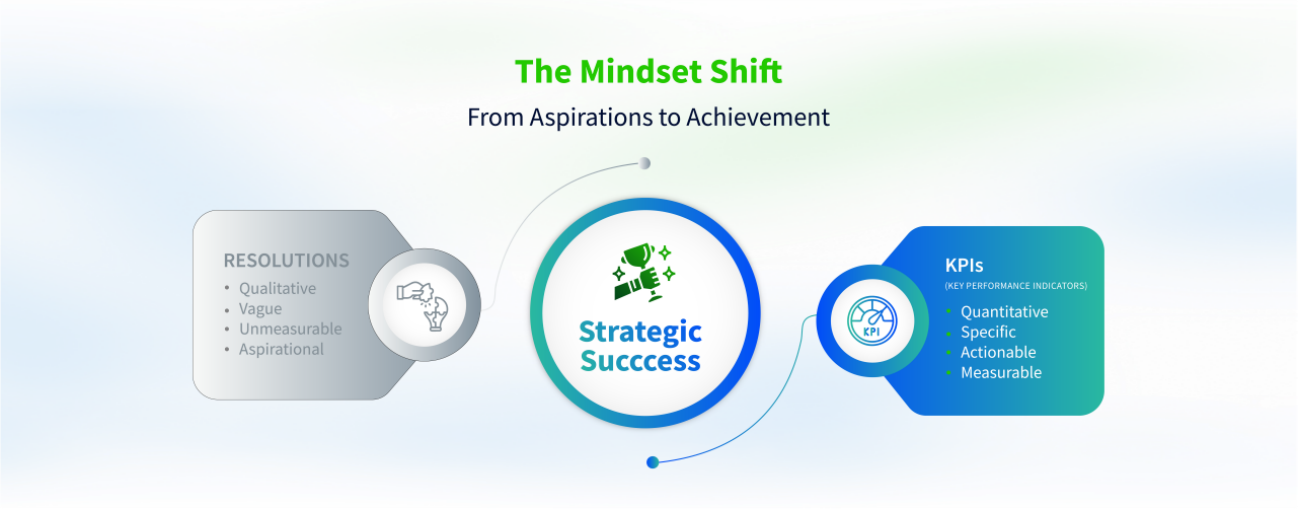
The start of a new quarter often brings with it vague, feel-good resolutions: “We’ll improve efficiency,” or “We’ll boost morale.” While well-intentioned, these statements lack the rigor necessary to drive meaningful, measurable progress. Success in Q1, and for the entire year, depends not on sentiment but on clearly defined Key Performance Indicators (KPIs) that connect daily activities directly to strategic business outcomes.
To successfully ‘Opscale’ a company, that is; to grow sustainably and strategically, leaders must pivot from qualitative goals to quantitative, time-bound metrics. These metrics serve as the operational roadmap, helping teams prioritize efforts and measure impact precisely. Here, we outline the foundational HR and Operations KPIs that every ambitious organization should define and track throughout the first 90 days and beyond.
Part 1: The Human Engine: HR KPIs for Strategic Growth
Human Resources is no longer a purely administrative function; it is a strategic business partner whose performance dictates talent quality, organizational stability, and culture. The Opscalers of tomorrow understand that talent metrics are growth metrics.
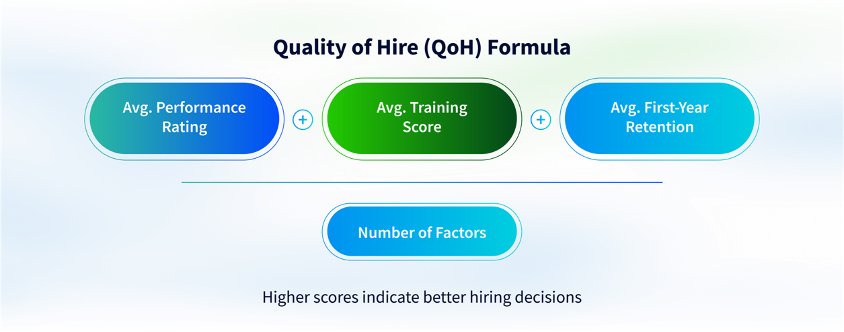
1. Time-to-Hire (TTH) and Quality of Hire (QoH)
High-growth businesses cannot afford bottlenecks in their talent acquisition process. Time-to-Hire measures the efficiency of your recruiting pipeline, while Quality of Hire measures the value a new employee brings.
- Q1 Goal: Reduce the average Time-to-Hire for critical roles by 15 days compared to the Q4 average.
- Why it Matters: A long TTH leaves teams understaffed and slows down product or service delivery. By targeting TTH, the organization ensures critical gaps are filled quickly. QoH, tracked via 6-month performance reviews and early voluntary turnover data, ensures the right talent is onboarded.
2. Voluntary Turnover Rate (VTR) by Department
Turnover is costly, but voluntary turnover is a crucial indicator of employee satisfaction, manager effectiveness, and culture health. Tracking this by department allows for targeted intervention.
- Q1 Goal: Maintain Voluntary Turnover Rate below the industry average (or below 5% for the quarter), with specific focus on reducing VTR in the top three highest-performing teams.
- Why it Matters: A high VTR signals systemic issues that directly impact institutional knowledge and productivity. By making this metric a priority, the HR team helps leadership foster a more resilient and attractive workplace culture.
3. Employee Net Promoter Score (eNPS)
Engagement scores offer a proxy for discretionary effort and loyalty. The eNPS survey (How likely are you to recommend our company as a place to work?) is simple, fast, and highly indicative of future retention and productivity.
- Q1 Goal: Increase the eNPS from X to Y (e.g., from 40 to 45) by the end of Q1, driven by targeted action plans resulting from Q4 feedback.
- Why it Matters: Employees who act as promoters are more engaged and productive. A clear, measurable increase in eNPS validates HR initiatives—such as improved communication or new training programs—and ensures the team is building an organization designed to opscale through its people.
Part 2: The Efficiency Machine: Operations KPIs for Optimization
The operations function is the backbone of efficiency, cost management, and quality control. Successful Opscalers focus on metrics that streamline processes and eliminate waste.
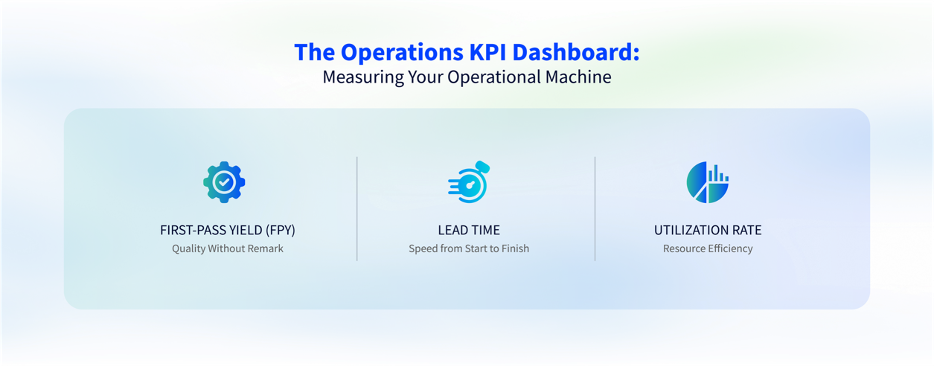
1. First Pass Yield (FPY)
FPY measures the percentage of products or services that pass all quality checks the first time without needing rework or scrap. This metric applies equally to a manufacturing line and a service delivery process (e.g., a perfect contract draft).
- Q1 Goal: Increase the overall organizational FPY from 92% to 95%.
- Why it Matters: FPY is a direct reflection of process quality. Low FPY means wasted resources, extended cycle times, and increased operational costs. By prioritizing FPY, the organization minimizes non-value-added activity and improves customer satisfaction immediately.
2. Customer Lead Time
Lead time measures the total duration from the initiation of an order or process (e.g., customer request submitted) to its final completion and delivery. This metric directly impacts customer experience.
- Q1 Goal: Reduce the average customer Lead Time for the primary service line from 7 days to 5 days.
- Why it Matters: In today’s fast-paced market, speed is a core differentiator. Shortening lead time improves customer satisfaction and often allows the company to process higher volumes, enabling the business to truly opscale its market reach without sacrificing quality.
3. Capacity Utilization Rate
Capacity Utilization is the ratio of actual output to potential maximum output over a specific period. This is essential for preventing bottlenecks and managing resources efficiently, whether they are production machines, software licenses, or employee time.
- Q1 Goal: Ensure that the utilization rate for high-cost machinery/senior consulting hours remains within the optimal 80%–90% range to avoid burnout and downtime.
- Why it Matters: Underutilization is wasted investment, while overutilization (approaching 100%) leads to system failures and burnout. Tracking utilization helps the operations team balance resource allocation, ensuring maximum output without risking system stability. This proactive capacity planning is key to enabling the entire organization to efficiently opscale when demand spikes.
Conclusion: Becoming Effective Opscalers
The shift from vague resolutions to quantifiable KPIs is the defining trait of a successful Q1 plan. By focusing on metrics like VTR, Time-to-Hire, FPY, and Lead Time, teams are empowered to make data-driven decisions every day. Remember that a KPI is only as good as the action plan behind it. Track consistently, review frequently, and be ready to adapt—that’s how you move beyond good intentions and become effective Opscalers of your own growth story.
Sources and References
[1] Expert Insight: Why It’s Not Too Late to Set Q1 KPIs for Employee Success (Onrec)
[2] HR KPIs: Top 11 Key Indicators for Human Resources (Factorial)
[3] 10 Essential HR KPIs That HR Professionals Should Be Tracking (HR Acuity)
[4] HR KPIs: The Executive Guide to Driving Strategic Growth (ExecViva)
[5] 18 production planning KPIs that drive business success (Fishbowl Inventory)
[6] Key Operational KPIs and Metrics to Track in 2025 (+ Template) (Cascade Strategy)
[7] A Guide to Quarterly Business Plans (Fractional CMO)